
When the NC Department of Transportation (NC DOT) expanded the highway system in the 1950s and 60s, many historic black neighborhoods in Durham fell victim to demolition, Hayti most notable among them. Thus, when the Phase 2 of the construction of the Durham Freeway NC-147, then known as the East-West Expressway, began with Crest Street – a historic, predominantly black neighborhood – squarely in its path, it sparked a wave of opposition from the community itself, but also local organizations in Durham. Among the many community organizations to rally around this issue, a young People’s Alliance stepped up to join the defense. This fight proved formative for many PA members and helped shaped it into the organization we know today.
A Brief History of Crest Street
The Crest Street neighborhood, also known as Hickstown, traces its roots back to 1863, when Hawkin Hicks was awarded ownership over the land that would become Crest Street. Though Hicks, the primary landlord over the area, was white, the majority of the settlers in the community were African-American. They settled the land due to its affordability, as white Orange County residents considered it undesirable, a common hallmark found in stories of the early histories of western Hayti, Brookstown or Smoky Hollow. The neighborhood we recognize began to coalesce around the New Bethel Baptist Church, organized in 1879 by Rev. John Scales, which would continue to hold significance to the community for over a century to come.
When the 1960s arrived, and with it optimistic visions of urban renewal brought forth by highway projects, many similar historic African-American neighborhoods, such as Hayti, would be demolished or divided as the Durham Freeway, NC-147, then known as the East-West Expressway, made its way from RTP through downtown Durham, avoiding large industrial areas such as the former Durham Cotton Manufacturing Company or American Tobacco. The first phase of the highway’s construction would end at West Chapel Hill Street by 1969, setting the stage for the Crest Street fight against the Expressway in the 1970s, set against the backdrop of further environmental regulations and changing public sentiment regarding the necessity and impacts of large highway projects.
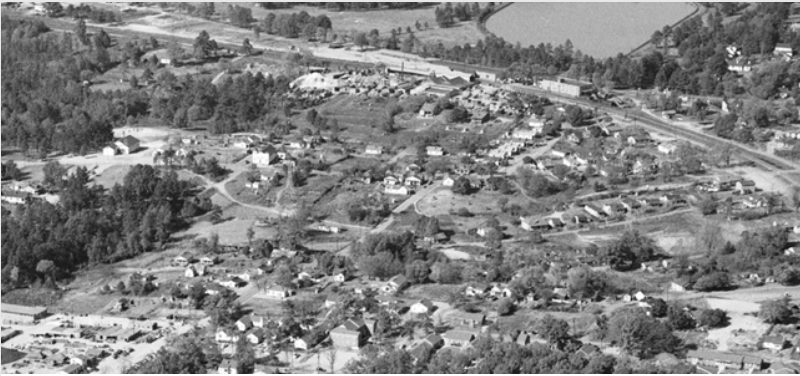
Bird's eye view of Hickstown, looking northeast, mid-1950s (Courtesy of The Herald-Sun Newspaper)
Crest Street’s Anti-Expressway Story
The story of Crest Street’s fight against the oncoming Expressway’s second phase would begin in the late 60s and early 70s, as the community got passed over for revitalization funding due to its “imminent destruction”. Despite being located right outside of Duke University and Hospital system, even by the 1970s the community still maintained a distinctly "rural" appearance, “rolling terrain with wooded lots and open fields”. As Mike Calhoun, a Legal Aide attorney who was instrumental in the fight recalled, “if anything, it was a little bit of a rural neighborhood then, there was a horse in the community when we started." It was a perception that was weaponized by many supporters of the Expressway when they called upon the city and the state Department of Transportation to continue the march of “progress”, even if sacrifices had to be made.
In 1978 as proponents made a case for the irreplaceable value of the Crest Street community, a Duke anthropologist would publish a study that would highlight the social cohesiveness and stability of the community, where there were “Innumerable primary relationships and informal helping networks." For instance, though comparatively few owned cars in the area, those without them could rely on their relatives or neighbors in the community for rides to work or for errands. It challenged the predominant narrative of the time surrounding the community. This opposition built during a period in which the NC DOT had halted the Expressway’s construction in order to prepare an Environmental Impact Statement, as required by the National Environmental Policy Act (1970).
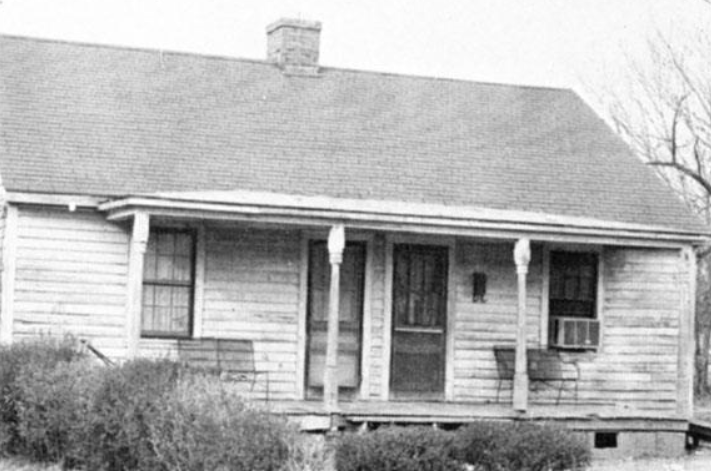
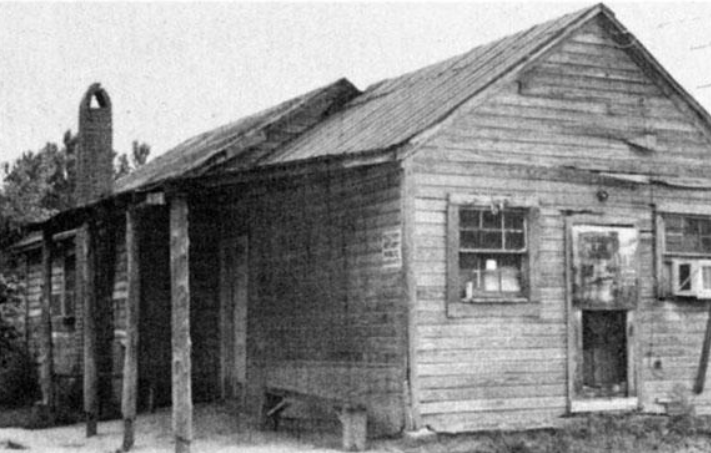
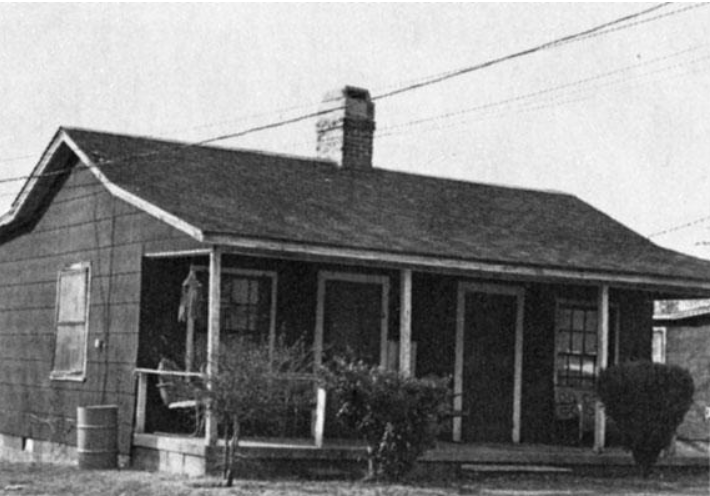
Examples of houses in Crest Street, 1979, Courtesy of OpenDurham
When it became clear that state and federal authorities were done delaying the demolition of the neighborhood, the Crest Street community, spearheaded by the Crest Street Community Council and supported by other grassroots organizations such as the People’s Alliance, the Durham Committee on the Affairs of Black People (DCABP), and the Durham Voters Alliance (DVA), would organize the anti-Expressway movement and rally public support against the Expressway extension plans. With the help of Legal Aide attorneys Mike Calhoun and Alice Ratliff, they filed an administrative complaint using the Title VI of the 1964 Civil Rights Act to the U.S. Department of Transportation (US DOT).
The Crest Street community-led grassroots coalition’s efforts would be rewarded in February 1979, when the City Council, after months of political maneuvering surrounding two unfilled seats, finally swore in a sympathetic councilman and garnered enough votes to block the highway extension. The February 1979 City Council vote became a rallying cry for Expressway supporters, centered mostly around Durham’s business community. They began their own political lobbying campaign, culminating in the mayoral and city council election later that year, where anti-Expressway candidates would be defeated narrowly across the board.
Despite that setback, however, the legal strategy continued to bear fruit, as the US DOT issued a preliminary judgement in favor of the community in response to the prior complaint. Formal negotiations would begin between a broad set of stakeholders: the NC DOT, Federal Highway Administration (FHWA), the City and County, Duke University, the Crest Street Community Council (CSCC), DCABP and the People’s Alliance. This “steering committee” would be plagued with political posturing and would make little progress before negotiations collapsed due to the approval of a divisive zoning request that would allow a hotel to be built in the area.
It was only when a second round of negotiations involving a smaller group, with only the City, NC DOT, FHWA, Duke and the Crest Street Community Council involved, that an acceptable resolution was concluded. The CSCC helped its case by bringing in their own traffic engineering consultant who demonstrated an alternative plan for the expressway that would take up less land area, thereby freeing up funding for the reconstruction and relocation of the Crest Street community in its entirety to the present location. This was a massive victory for the community as in many similar cases, such that of Hayti a decade earlier, communities in the way of highway projects would essentially be destroyed and its residents dispersed to various public housing with scant compensation. By February 1982, a mitigation plan acceptable to all parties would be agreed upon.
People's Alliance's Role
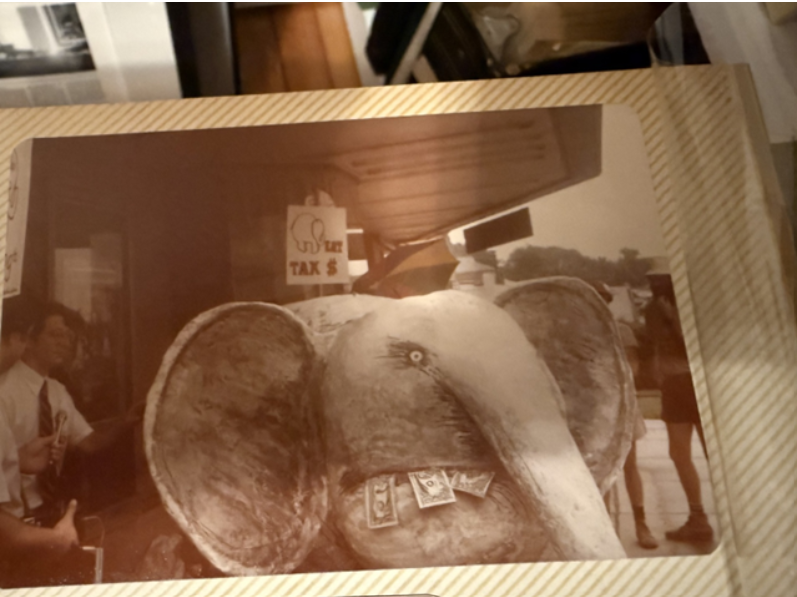
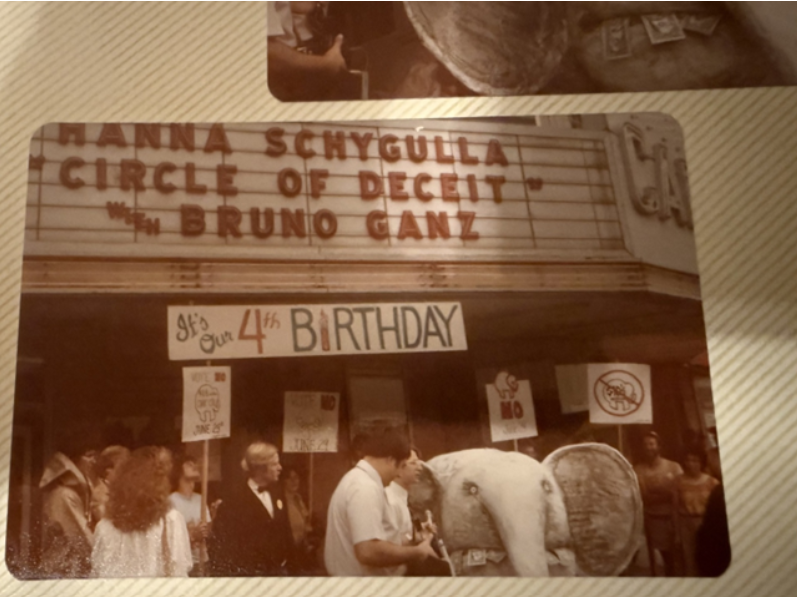
White Elephant made by Alan Troxler to demonstrate PA opposition, press conference outside Carolina Theater, undated, courtesy of Steve Schewel
As with much of the early history of the People’s Alliance, pin-pointing the exact date that the People’s Alliance began lending its support to the Crest Street community in opposing the Expressway is difficult, as by nature much of grassroot organizing is very informal. The first mentions of the official People’s Alliance stance against the Expressway would come in October of 1977, when an issue of the People’s Word - the People’s Alliance newsletter - mentioned the Durham Chapter working closely with the Crest Street community and other groups in opposition to the Expressway. But, as one of PA’s Durham Chapter’s first members, future Mayor Steve Schewel recalls, PA’s opposition to the Expressway dated back to some of its first meetings.
It was the late 70s, I heard about a new group called the People’s Alliance, and they were showing a movie in the basement of the Watts Street Baptist Church. The movie was called ‘Negro Durham Marches On’, and that movie was about the Hayti neighborhood in Durham that had been a vibrant business and residential African American neighborhood. It was destroyed by the previous leg of the Expressway. So the movie was about that area, and then they would begin to talk, at that meeting, about the next leg of the Expressway, and they decided that our local chapter, so just a few of us, maybe, I don’t know, 5 or 10 of us, we would take on that effort.
The People’s Alliance soon settled into its primary role during the Crest Street fight, which was to research on the topic at hand – the impacts of the expressway – and to lobby, build coalitions and garner support from the public and local organizations. As Schewel put it:
We help them research. We lobby council members and the mayor. We strategize together about how to win, going with them to get other organizations, endorsements into our coalition, working closely with their attorneys on a legal strategy, supporting candidates that they supported for City Council. Yeah, assisting with community events that we would go to. So, we were very involved with the community.
PA’s primary research contribution to the Crest Street fight would be its Position Paper, officially titled the People’s Alliance Position Paper Against East-West Expressway. This document detailed the People’s Alliance’s stance in opposition against the Expressway, complete with individual evidence-based arguments. The position paper provided a background context for the lack of opposition to the initial phase of the Expressway, highlighting the protests of the Hayti community that had fallen on deaf ears during the political climate of the 1960s.
The paper provided arguments not only on the grounds of community protection, but also environmental concerns (the additional through-traffic induced by the Expressway could drive further truck traffic through downtown Durham instead of around), and economic concerns (the Expressway would facilitate suburbanization that would drive out the tax base and businesses from the city). The position paper then went on to list alternatives to the plan, which ranged from supporting an expansion of the public transportation system, to widening various streets such as Erwin Road, Hillsborough Road and completing Main Street in place of extending the Expressway.
The People’s Alliance position paper would go on to influence the anti-Expressway movement, with the arguments made in the paper echoing across the coalition. This could be seen through the pages of contemporary newspapers, where at the height of the Expressway debate between 1978 to 1980, lively debates occurred through reader-submitted opinion pieces. Many opponents of the Expressway would use arguments articulated in the PA’s position paper, from the trucking traffic to community destruction, to economic exodus. Schewel, as one of the co-authors of the Position Paper, said that they wanted to broaden the scope of the opposition against the Expressway through legitimate arguments, and to show people who did not have as much personal investment in Crest Street how this Expressway may still be against their own personal interest. This was a lesson that would continue to influence PA to this day, as the organization strives to build bigger coalitions under bigger umbrellas.
The other notable contribution from People’s Alliance would be its direct-action activism. Calhoun, one of the primary attorneys representing Crest Street at the time, recalled:
They really helped the turnout. I mean, one of the things that People's Alliance I think had that was a real strength, really, is they had lots of foot soldiers who would get out. and organize for elections, to show up for meetings, put out the political materials, so that was helpful. And I think the inflection point with some of those meetings were “Yeah, we got the Trinity Park Association to oppose it”, “We got lots and lots of churches in town to oppose the freeway."
This kind of organizing and activism was the People’s Alliance’s bread-and-butter at the time, at least in its early stages. PA was instrumental in laying the groundwork for reaching out to other organizations and raising awareness of the issue, such as when they collected around six thousand signatures opposing the Expressway. This strategy culminated in 1980, when the People's Alliance (PA) would be a member of the initial Steering Committee that sought to negotiate a settlement. Despite this, various sources remarked that the People’s Alliance’s participation, alongside that of other grassroots political organizations like DCABP, was more of a hindrance to the committee's progress. Individual political agendas and hard-line stances detracted from the committee's overall mission of finding a compromise solution. It wasn’t until the second committee/task force was formed without political organizations like People's Alliance and DCABP that a final settlement was finally agreed upon.
This experience allowed the fledgling organization to come to the realization, forged through other experiences over the course of the Crest Street fight, that, in order to most effectively create change, their focus should be electoral politics. This inflection point in PA’s history could be found in the elections of 1979.
As mentioned, in February of that year, a progressive-majority City Council voted to block the construction of the Expressway, triggering for the first time in the Expressway fight, the full political mobilization of Durham’s business community. Their aim was squarely on the Mayoral and City Council election later that year. In response, the People’s Alliance alongside the DCABP and the DVA would back progressive, diverse, anti-Expressway candidates against the blanket array of white, business-backed candidates.
The business community won out, and despite it being a close call, every single candidate backed by the People's Alliance, DCABP, DVA coalition failed to win election. It however, signaled the beginning of a progressive, biracial electoral coalition in the city of Durham unseen up to that point. Furthermore, PA was able to effectively expand this coalition, though advocating with more liberal, older white folks in the area. As Steve Schewel recalled:
The Durham Committee on the Affairs of Black People was a very strong political organization that took over thousands and thousands of votes. But not enough votes alone to win local elections. So our goal is to be allies of them and for us to back the same candidates. So yeah, we were trying to create a biracial coalition so that there would be, you know, racial power sharing, in Durham, that was a big goal… but we didn't have a formal political action committee that made endorsements until several years later...So we wanted to take over the Democratic Party precincts in the area, because the Democratic Party in our area had been supportive of the Expressway. So we did a lot of recruiting, and we were able to get a lot of older white voters to support us.
Despite the loss in the 1979 elections, the coalition that was built and the experiences from the process would produce victories for PA in just a few short years. By the mid 80s, progressive candidates would increasingly become more viable and dominant in Durham’s political scene, something that would’ve been unthinkable just a decade prior.
Crest Street's Impact on PA
The Crest Street struggle was one of the foundational experiences for the People’s Alliance (PA), marking its first major campaign as an organization. PA entered the fight primarily focused on issues-based organizing and emerged from it with a deepened understanding of the necessity of engagement in electoral and legal politics. This experience steered the organization’s trajectory, shaping its strategies in future campaigns. More importantly, the Crest Street fight forged a crucial partnership between PA and its allied organizations, such as DCABP, laying the groundwork for more effective organizing around future issues.
In many research papers and personal recollections, the People’s Alliance’s role in the Crest Street fight is sometimes overstated. For instance, The Politics of Relocation: The Moving of the Crest Street Community, a 1991 study by two UNC Chapel Hill academics, credited PA as “the primary organizing force behind the coalition.” While PA was certainly an important contributor, it was not the organization’s leadership, but rather the leadership from within the Crest Street community itself, exemplified by figures like Willie Patterson, former president of the Crest Street Community Council, that carried the coalition to victory. Crest Street then, in the People’s Alliance mythos, is not a story where the organization fully came into its own and carried the coalition to victory, but rather a story of how a young liberal activist organization would come to learn its most defining strategies.
Thus, this research seeks to demystify the People’s Alliance’s role in the Crest Street struggle. By situating PA’s contributions within the broader context of community leadership, it aims to expand the collective memory of this pivotal moment in Durham’s history, and to help us never forget its lessons.
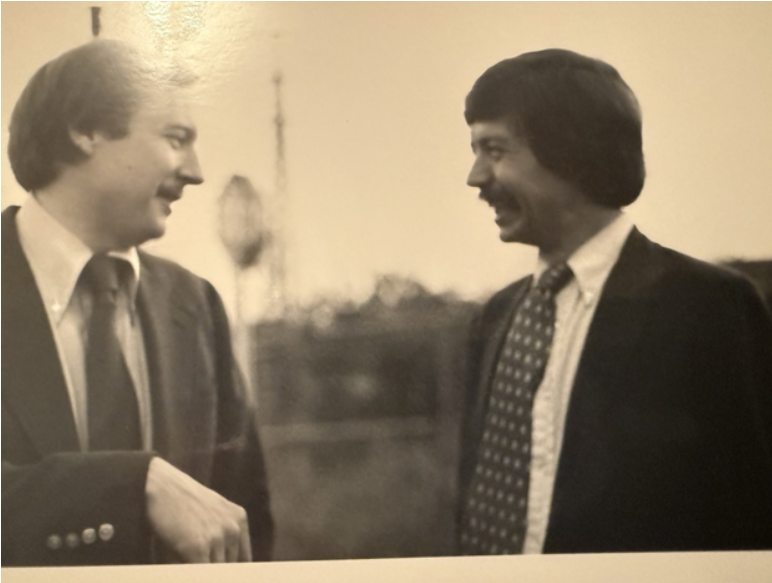
Mark Hellman and Paul Luebke, Crest Street Victory Party, early 1980s, courtesy of Steve Schewel
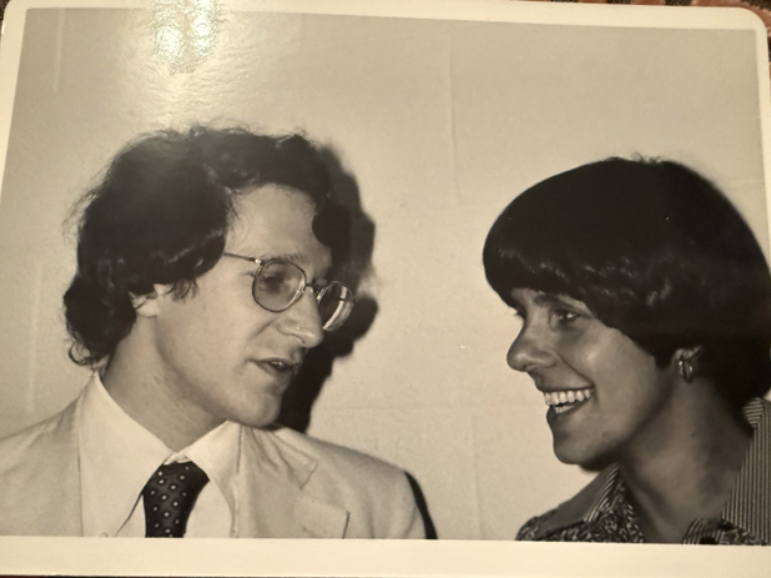
Steve Schewel and Frances Lynn, Crest Street Victory Party, early 1980s, courtesy of Steve Schewel
Showing 2 reactions
Sign in with